

The short answer
Usually, if you carry the coverage that matches the cause. Hail, falling branches, flying gravel and vandalism fall under comprehensive; hitting something falls under collision; a dent another driver caused is paid by their liability insurance, with no deductible for you. A hit-and-run is covered by uninsured motorist coverage only if you report it to police. Liability-only policies pay nothing toward your own car. Your deductible applies to each claim, so a small ding that costs less than it is rarely worth filing.
 Written by the DentPicks Editorial Team
Technically reviewed by Vytas Kucinskas, Founder & Master PDR Technician
Written by the DentPicks Editorial Team
Technically reviewed by Vytas Kucinskas, Founder & Master PDR Technician
Published: Oct 1, 2026 · Last reviewed: Oct 1, 2026 · 11 min read
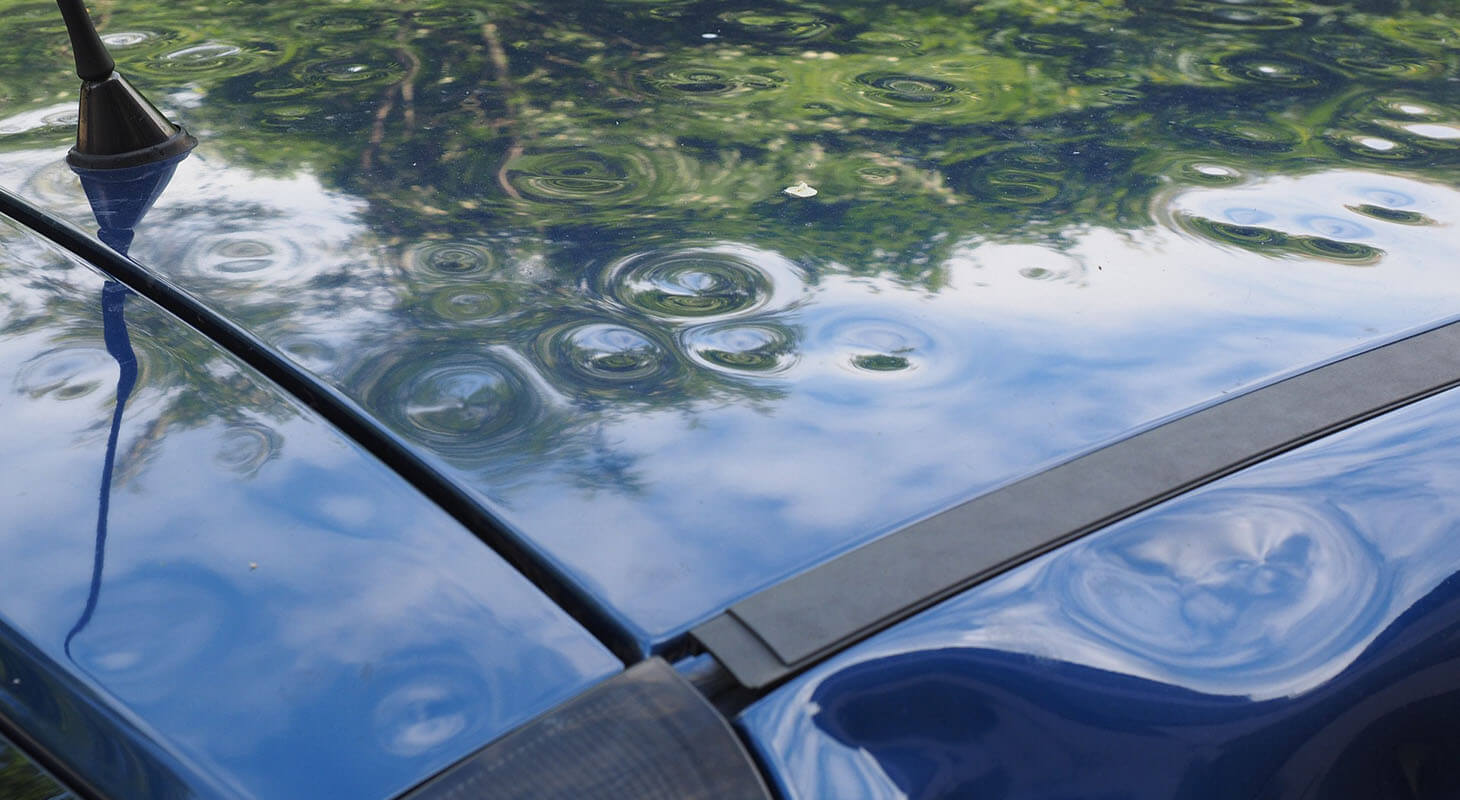
Car insurance does pay for dent repair, but never because something is a dent. An auto policy is a bundle of separate coverages, and each one is triggered by a kind of event: weather, a crash, a theft, another driver's mistake. The same shallow dimple in a front door can be fully paid, paid minus a deductible, paid by a stranger's insurance company, or not paid at all, depending on how it got there and which coverages you bought.
So the useful question is: what caused this, and which line of which policy does that cause land on? This guide works through the common causes using the Texas Department of Insurance's auto insurance guide as the reference point. It is general information, not legal or insurance advice; your policy wording controls, and your insurer or licensed agent can confirm how it applies to you.
The cause decides the coverage
Here is the map in one place. Each row is explained below, and the same cause can be classified differently by different policies, so treat it as the usual outcome rather than a guarantee.
| What caused the dent | Who usually pays | Your deductible? |
|---|---|---|
| Hail, wind-blown debris, a falling branch | Your comprehensive coverage | Yes, the comprehensive deductible |
| Vandalism: a kicked door, a thrown object | Your comprehensive coverage | Yes |
| Flying gravel or road debris, hitting an animal | Your comprehensive coverage | Yes |
| You backed into a pole, a gate or your garage | Your collision coverage | Yes, the collision deductible |
| An identified driver hit or dinged your car | That driver's liability coverage | No |
| A driver hit your car and left | Your uninsured motorist coverage, if reported to police, or your collision coverage | Yes |
| A ding you found later, cause unknown | Depends on how your insurer classifies it | Yes, whichever applies |
| Any of the above, liability-only policy | Nobody, unless another person is at fault | Not applicable |
Hail, storms and falling objects: comprehensive
TDI describes comprehensive as "other than collision" coverage: it pays when your car is stolen or damaged by fire, flood, vandalism or anything that is not a collision, and its coverage table lists hail, flying gravel and hitting an animal there. A pecan limb dropping onto the hood in a spring storm belongs here too, as does a trash can blown across the driveway into a quarter panel.
Two details are worth knowing. Comprehensive has no dollar limit the way liability does, but the insurer pays only up to the vehicle's actual cash value, which is why a heavily damaged older car can be totaled. And a Texas insurer cannot refuse to renew your policy because of claims for weather damage or for flying or falling objects, although after three falling-object claims in 36 months it may raise your deductible. That is a renewal protection, not a price freeze; see how a hail claim affects premiums and renewal, and hail repair and your insurance deductible for the hail deductible itself.
Vandalism and road debris
Deliberate damage by someone else, such as a kicked door or a dent from a thrown bottle, is normally a comprehensive loss. A police report is not always required, but it costs little, gives the claim a date and a third-party record, and helps if the adjuster asks whether the damage was really intentional rather than a parking mishap.
Road debris is often misfiled in people's heads. A rock thrown up by a truck on the Dallas North Tollway feels like a collision, yet TDI places flying gravel under comprehensive. If you drove into the debris, such as a tire tread lying in the lane, some insurers treat it as collision instead. Describe what happened plainly and let the claims representative classify it.
Another car was involved: collision or their liability
You hit something
Backing into a bollard, clipping the garage frame or nudging a parked car are collision losses on your own policy, and your collision deductible applies. If you hit someone else's car, your liability coverage pays for their damage, not yours.
Someone else hit you, and you know who
You can file directly with the at-fault driver's insurer, and TDI is explicit that you do not pay a deductible on a claim against another driver's company. It is also the least predictable route, because you have no contract with that company. TDI's guidance on dealing with the other driver's insurance lists what can go wrong: the insurer can deny fault, argue both drivers share it, say its policyholder's limits are too low, or be slow to respond.
Your fallback is your own collision coverage. You pay your deductible, your insurer pays for the repair and then tries to recover from the other company; if it does, you may get your deductible back. Texas minimum liability includes only $25,000 for property damage, which covers a dented door easily but can run short in a multi-car crash.
For a parking-lot ding where the other driver is present, collect their name, phone, plate, insurer and policy number, a photo of their insurance card, and photos of both cars where they sit.
Hit-and-run and the ding nobody saw
Uninsured/underinsured motorist coverage pays when the at-fault driver has no insurance or not enough, and TDI notes it also pays for a hit-and-run, with a condition that catches people: it will not pay for a hit-and-run you did not report to police. If you come back to a fresh dent with paint transfer and no note, call the non-emergency line before you leave the lot. Texas insurers must offer this coverage, but you can reject it in writing, so check whether you have it.
The shallow door ding you notice a week later has no driver, no date and no report. Policies differ on how they classify unexplained damage, and your insurer decides. Do not guess at a cause to fit a coverage; describe what you know. In practice it rarely matters, because a single door ding almost always costs less than either deductible.
Liability-only: none of your own damage
Texas requires drivers to show they can pay for accidents they cause, which most do with liability insurance at the 30/60/25 minimum. Liability pays for other people's cars and injuries, never yours. With liability only on a car you own outright, every dent from hail, vandalism, debris or your own driving is out of pocket, unless an identifiable driver caused it and their liability coverage owes you. If you still owe money on the car, your lender will require collision and comprehensive, and if those lapse it can buy expensive single-interest coverage that protects only the lender. For owners without coverage, what hail repair costs without insurance sets out the numbers.
Deductibles: when a small dent is not worth a claim
An auto deductible applies to each claim, not to the year. TDI's deductible guidance uses the example of a wreck in February and a break-in in June: the full deductible comes off each one. Comprehensive and collision often carry different deductibles, so check both lines on the declarations page.
If a dent costs $300 to repair and your deductible is $500, insurance pays nothing and you have still reported a loss. At $700 the claim is worth $200 to you, set against a possible higher premium, a lost claim-free discount and an entry in your CLUE claims history that other insurers can see. TDI's advice is to get repair estimates first and consider not filing when repairs cost about the same as or less than the deductible. Asking your agent whether something would be covered is not the same as filing, and TDI says a company cannot charge you more for a claim it did not pay.
Most single dings and small dents at our shop come in well under a typical deductible, as the PDR cost guide shows, and the full weighing is in paying cash vs. filing a dent claim. Hail is the usual exception, because damage across a roof, hood and trunk lid quickly outruns a deductible. On many approved hail claims DentPicks waives the deductible up to $1,000; that applies to hail, not collision or vandalism, and not to every claim. Deductible assistance and rebate offers explains what such an offer should mean.
"Insurance-approved" repair and choosing your own shop
Texas has no state approval or license called insurance-approved. The label usually means a shop belongs to one insurer's preferred network, and TDI's guide is direct: insurers may give you a list of preferred shops, but they cannot require you to use one. The insurer pays based on the adjuster's estimate either way, and if the damage proves worse, you or the shop can ask the adjuster to raise it, a routine step explained in how insurance supplements work. More on shop choice is in can I choose my own hail repair shop in Texas.
Whichever shop you use, you file the claim; a shop cannot open it for you. A good shop walks alongside you: it documents the damage under proper lighting, meets the adjuster and submits supplements. That is how claims work at DentPicks dent repair in Plano, and our insurance page lays out the process.
Coverage pays for a repair, not for a method
A policy pays to restore covered damage, and the adjuster's estimate decides how. With intact paint and reachable metal, paintless dent repair is often the method, because it keeps the factory finish. When paint is cracked or the metal badly stretched, the estimate moves to conventional body work, and panels sometimes do get replaced and repainted, with the insurer owing parts of like kind and quality rather than necessarily original ones.
Before you call your insurer
- Pin down the cause and the date. Storm, vandal, other driver, debris or unknown: that decides the coverage line before anything else.
- Photograph the car where the damage happened, with the surroundings visible, and keep any police report number. Report a hit-and-run to police so uninsured motorist coverage stays available.
- Read your declarations page for comprehensive, collision and uninsured motorist coverage and each deductible.
- Get the repair number. The photo estimate form usually returns a verbal figure in about 30 minutes; an in-person inspection settles it, because photos undercount shallow dents.
- Compare it to the deductible, then decide. If you file, file promptly; TDI notes most companies have reporting deadlines.
Frequently asked questions
Is a door ding in a parking lot a comprehensive or collision claim?
It depends on what is known and on your policy wording. Contact from another car's door is usually treated as collision-type damage, and if you can identify the other driver it belongs on their liability coverage instead. When nobody knows what happened, your insurer decides how to classify it. In practice a single ding usually costs less than either deductible, which settles the question first.
Do I pay a deductible if another driver dented my car?
Not when you claim against the other driver's insurance. The Texas Department of Insurance notes that deductibles apply to your own collision, comprehensive and uninsured motorist claims, not to claims against another driver's company. If their insurer disputes fault and you use your own collision coverage instead, your deductible applies, though it may be reimbursed if your insurer recovers from them.
Will my liability insurance pay to fix dents on my own car?
No. Liability coverage pays for damage you cause to other people's property and their injuries. It pays nothing toward your own vehicle. Liability-only is legal in Texas on a car you own outright, but dents from hail, vandalism or your own mistakes are then entirely out of pocket. The one exception is when someone else is at fault: their liability coverage can pay you.
Can my insurer drop me for a hail or falling-object claim in Texas?
Texas restricts it. Under TDI's auto guide, a company cannot nonrenew your policy because of weather-damage claims or claims for flying or falling objects, though it can raise your deductible after three falling-object claims in 36 months. That protection is about renewal, not price: TDI also says auto premiums can rise for most claims, and claim-free discounts can be lost.
What does insurance-approved dent repair actually mean?
There is no state approval or license by that name. It usually means a shop belongs to an insurer's preferred network. Texas insurers may give you a list of preferred shops, but they cannot require you to use one. The insurer pays based on the adjuster's estimate whichever shop you choose, and you or the shop can ask the adjuster to raise it if more damage turns up.
Does a claim that gets denied still count against me?
According to TDI, home and auto companies cannot charge you more for claims they did not pay, including claims denied because the policy does not cover the damage. Calling your agent to ask about coverage does not count as a claim either. A claim that is paid, even a small one, can show up in your CLUE claims history.
Sources and methodology
- Auto insurance guide — Texas Department of Insurance.
- Accident not your fault? Here's how to deal with the other driver's insurance — Texas Department of Insurance.
- Will my premium go up if I file a claim? — Texas Department of Insurance.
- What to know about deductibles — Texas Department of Insurance.
Repair, cost and timing statements that are not tied to a listed source come from DentPicks' own quoting and repair history at the Plano, TX shop. They are typical ranges and shop-floor observations, not industry statistics or promises — your vehicle, its condition, your policy language and your insurer determine your specific outcome.
Not sure which policy your dent belongs on?
Get the repair number first. Use the photo form for a verbal figure, usually back in about 30 minutes, or bring the car to Plano for a free read under line lighting before you call your insurer.